
India and ASEAN have relations "free from contests and claims" and believe in sovereign equality of all nations irrespective of size, and support for free and open pathways of commerce and engagement, Prime Minister Narendra Modi wrote in his column.
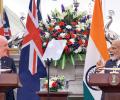
India and New Zealand have signed a pact to institutionalize their defence ties and vowed to boost cooperation in the Indo-Pacific. Prime Minister Narendra Modi raised concerns about anti-India activities by some illegal elements in New Zealand with his Kiwi counterpart Christopher Luxon. The two sides also signed six agreements to enhance cooperation in areas including education, sports, agriculture, and climate change. They also agreed to prepare a roadmap for cooperation in the defence industry sector and explore early implementation of cooperation in the digital payments sector.
India has been forcefully raising the issue of market access as well as protected lists of goods mainly to shield its domestic market as there have been fears that the country may be flooded with cheap Chinese agricultural and industrial products once it signs the deal.

Sources said Wang is primarily visiting India to hold boundary talks with National Security Advisor Ajit Doval.

His visit to India followed a few cancelled plans since he took office in July 2019 due to the coronavirus pandemic crisis, with the two leaders holding several virtual talks and eventually meeting in person on the sidelines of the COP26 climate summit in Glasgow last November.
Prime Minister Narendra Modi on Tuesday invited investors here to participate in the proposed divestment of Navratna PSUs
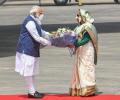
Bangladesh Prime Minister Sheikh Hasina is expected to travel to India on September 5 on a three-day official visit during which defence cooperation and regional stability are likely to be the focus of her talks with Indian counterpart Narendra Modi, an official said on Monday.

The US "Indo-Pacific Strategy" is bound to be a failed strategy, Wang said in the comments posted by the Chinese foreign ministry on its website.

While addressing the 14th ASEAN-India summit, the PM noted that growing radicalism and spread of extreme violence are the other security threats.

Frosty Indo-Pak relations after the beheading of Indian soldiers by Pakistani troops were on full display in Yokohama, Japan.
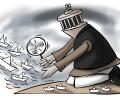
As India goes into firming up trade deals with developed nations like Australia, the United Kingdom (UK) and the regional bloc, and the European Union (EU), it will have to be well prepared to negotiate on new-generation issues, such as data protection regulation, e-commerce, and environment. India is yet to negotiate pacts with its trading partners on these evolving issues since discussions between them have until now been largely focused on tariff and non-tariff barriers and the rules of origin. "We can no longer look at trade just as trade. We have to look at it in totality of global and regional conditions.
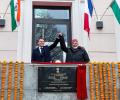
Prime Minister Narendra Modi and French President Emmanuel Macron have called for enhancing trade and investment ties between their countries and committed to further deepening their engagement in the Indo-Pacific. They discussed a full spectrum of bilateral relations, including key global and regional issues, and stressed the urgent need for reform in the United Nations Security Council. The leaders also underscored their commitment to ensuring the global AI sector can drive positive social, economic, and environmental outcomes.
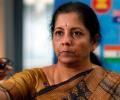
To propel demand, one should concentrate on indirect taxes and bring down the goods and services tax (GST) rates to a uniform 12 per cent as the Vijay Kelkar panel had recommended, said Ajit Ranade, chief economist at Aditya Birla Group.

'The deepening of China-Nepal relations need not cause heartburn in India,' says Ambassador M K Bhadrakumar.

Goyal was to visit Beijing from August 2 to 3 to take part in the RCEP Intersessional Ministerial meet.

'Mere fundamentals will not do the trick,' cautions former commerce secretary Rahul Khullar.

The prime minister will have a tight schedule in the Philippines as besides attending the 15th ASEAN-India summit and 12th East Asia summit on November 14, he will have a series of other engagements including bilateral meetings with several leaders.

The agreement provides for extensive cooperation in the civil nuclear energy sector including in research and development for peaceful uses of nuclear energy, they said.

Some of these nations are India's biggest export market. India is also dependent on these countries to meet its energy needs.

It is often said that the India-Indonesia relationship is overshadowed by mutual neglect.

Prime Minister Malcolm Turnbull's first State visit to India is an indication of the success of India's Act East Policy, says Dr Rahul Mishra.

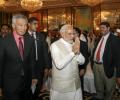
Modi will have a number of high-profile multilateral and bilateral meetings with global leaders including United States Vice President Mike Pence and Singapore premier Lee Hsein Loong.

The Asean secretariat hopes the meet may be able to iron out existing wrinkles raised by India. Since there had been no significant progress on the matter over the past two years on most issues, New Delhi is yet to decide on the invite.
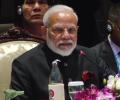
The agenda prepared by ministers will be discussed by Prime Minister Narendra Modi and other RCEP leaders in Nonthaburi, a city north of Bangkok, on November 4, the official deadline to close talks.
Sharma proposes to pass on the 'handover note' to his successor, which as per the poll projections is likely to be from Bharatiya Janata Party-led National Democratic Alliance.
We have a government with an extremely weak economic team advising a PM who hardly pays attention to their thoughts, says Jayanta Roy.
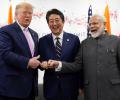
Prime Ministers Modi and Abe enjoyed a close and empathetic relationship and this certainly gave a sustained momentum to the India-Japan strategic partnership. It is necessary for India to reach out and engage with his successor as early as possible, advises former foreign secretary Shyam Saran.

"It's ironic that Modi visited Tokyo a few days ago and talked about China's expansionism. The key now will be to get beyond such unnecessary controversies and start afresh.'
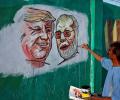
Existing trade deals, especially the 2009 pact with the Asean bloc, have been panned by the Centre for not boosting exports but flooding the domestic market with cheap imports. Subsequently, New Delhi has called for reviewing FTAs with Japan and South Korea. Going by that, a trade deal with the US is unlikely to be beneficial, say experts.

He also said that his country would continue to talk about the Kashmir issue "through channels that are acceptable" and prayed that "the issue is amicably resolved".
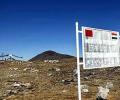
Prime minister likely to visit Beijing, Shanghai; also President Xi's home province, Shaanxi. Nayanima Basu reports
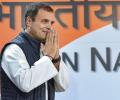
The assembly election results are likely to put a lid on the impending battle the old guard and young Turks, strengthen the hands of the veterans, and force the younger leaders to negotiate a truce. Archis Mohan reports.

India can break into the top-50 in the FIFA rankings in the next 10 years, Sports Minister Mansukh Mandaviya said.
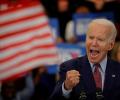
India will have to show more willingness to import, and since Biden will not encourage sale of oil and gas to bridge the gap, it means there has to be more meaningful duty reduction in other areas even if Delhi baulks at a Free Trade Agreement so soon after walking out of RCEP.
It became increasingly clear that the real negotiations the government had to conduct were with Indian business which was wary of yet another free trade agreement, points out T N Ninan.
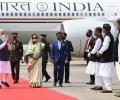
The South Asian nations could script a new history of cooperation and prosperity that could serve as an example for other nations, notes Dr Rahul Mishra.
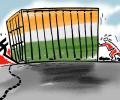
India needs a National Trade Policy Council, chaired by a minister who reports directly to the PM, says Jayanta Roy, former economic advisor to the Union commerce ministry.

'Given China's past behaviour and their territorial claims, should we be sceptical regarding China's willingness to adhere to these agreements fully? The answer is yes.' 'As Ronald Reagan famously said in the context of the SALT talks, 'Trust, but verify!' India should also do the same.' 'This has already begun with foot patrolling, drones, satellite imagery and so on. India's military deployment did mirror China's and will continue to do so in the future.'

Panagariya also stressed that India must continue the liberalisation of its top tariff rates and the country should not revert back to import substitution.

In the document, Russia underlined that it will build on a privileged strategic partnership with India with a view to enhance and expand cooperation in all areas on a mutually beneficial basis.
